If you are comparing new construction vs established homes in Pinecrest, the biggest surprise may be this: Pinecrest is not a one-style, one-era neighborhood. Instead, you are likely looking at a mix of older homes from the late 1940s through the 1950s, along with scattered newer infill projects. That can make your decision feel less straightforward, but it also gives you more options depending on your budget, maintenance goals, and space needs. Let’s dive in.
Pinecrest has a mixed housing story
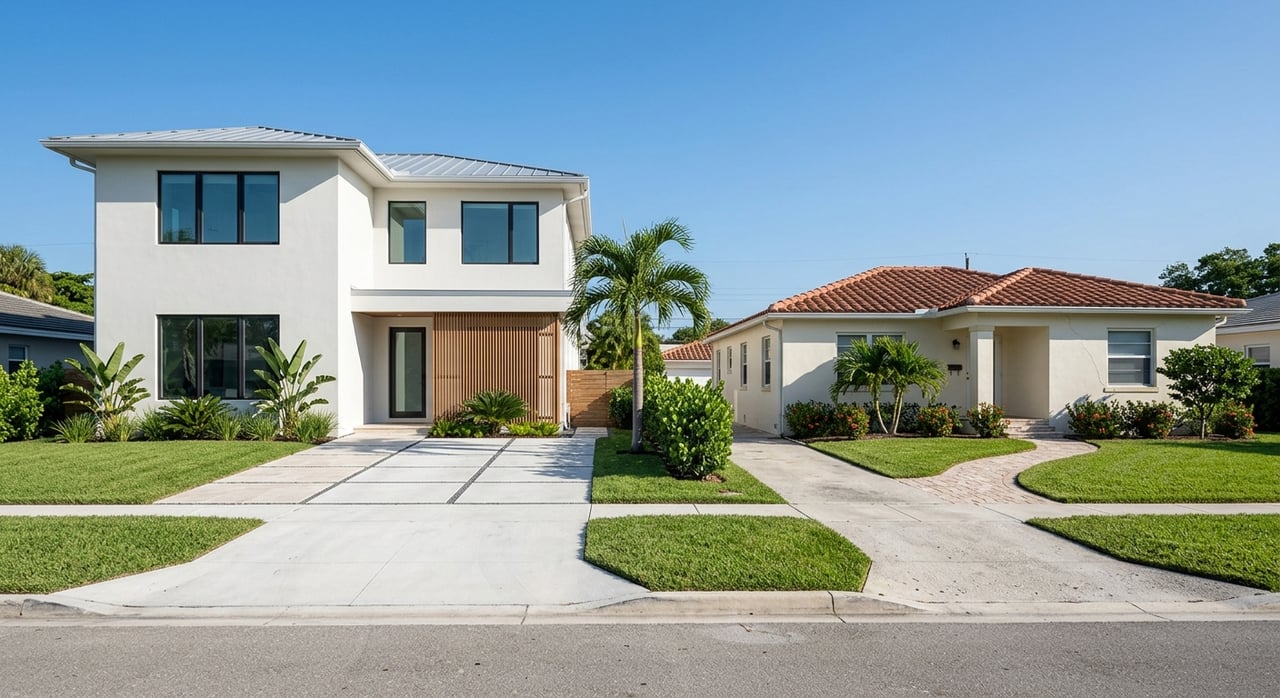
In Pinecrest, the choice is not usually between a large new-home community and a fully historic area. Current parcel examples show homes built in 1948, 1953, 1955, and 1957, along with a 2025 infill duplex. That means your search is often about comparing different construction eras within the same neighborhood name.
This matters because two homes just a few blocks apart may offer very different ownership experiences. One may have older systems and a larger or more irregular lot, while another may offer newer finishes and lower short-term upkeep. In Pinecrest, you need to evaluate each property on its own merits.
Established homes offer more variety
Many established Pinecrest homes sit on compact, regular lots, but lot size can vary more than you might expect. One 1953 example measures 744 square feet on a 5,014-square-foot lot with 49 feet of frontage, while a 1955 Pinecrest 1st Add home has 1,518 square feet on 0.43 acres with 126 feet of frontage and a carport. That kind of variation can affect parking, storage, yard use, and future improvement plans.
Style also varies across the neighborhood. Current listings include Cottage, A-Frame, and Traditional descriptions, which suggests a more eclectic housing stock rather than a consistent builder look. If you like character, different layouts, or a home that does not feel cookie-cutter, established Pinecrest homes may appeal to you.
What that means for your search
When you tour older homes in Pinecrest, pay attention to more than square footage. Lot frontage, parking setup, carports, and outdoor space may differ a lot from one block to the next. Those details can shape how well a home fits your daily routine.
You may also find more retrofit potential in an established property. If you are comfortable updating over time, an older home can give you flexibility in exchange for more near-term planning.
New construction brings newer systems
The clearest current new-build example in Pinecrest is a 2025 duplex on N V Street. It includes two mirrored 3-bedroom, 2-bath units with quartz counters, stainless appliances, luxury vinyl plank flooring, heat-pump HVAC, insulated walls, and a tankless gas water heater. It also sits on a corner lot with roughly 8 to 10 off-street parking spaces.
That is a very different product from many of the older single-family homes nearby. In Pinecrest, new construction appears to be more of an infill or redevelopment story than a large planned subdivision story. So if you want something newer here, you may be comparing a very modern property type against smaller, older homes with more varied layouts.
Why newer systems matter
For many buyers, the biggest advantage of newer construction is not just the finish level. It is the reduced likelihood of immediate work on major systems. Newer HVAC, better insulation, and modern water-heating equipment can make ownership feel more predictable in the first few years.
The 2025 duplex example specifically advertises heat-pump HVAC, insulated walls, and a tankless water heater. Florida's energy code requires residential buildings to meet the Florida Building Code, Energy Conservation provisions, which makes energy performance an important part of the conversation when you compare newer and older homes.
Older homes may need closer review
Established homes in Pinecrest can offer charm and flexibility, but they may also come with more maintenance items. One 1953 home has a floor/wall furnace and permit history showing an electrical rewire and main-panel upgrade. A 1957 Pinecrest home still uses septic, and a 1948 home is listed with no energy features and no HOA.
These are not automatic deal-breakers. They are simply reminders that older homes often require more due diligence before you buy. Roof condition, electrical updates, HVAC age, plumbing, septic status, and insulation can all affect your true cost of ownership.
Key items to compare
If you are weighing an older home against newer construction in Pinecrest, focus on these practical checks:
- Roof age and visible condition
- Electrical service and panel updates
- HVAC type and age
- Plumbing materials and repair history
- Septic versus other utility arrangements
- Insulation and general energy performance
- Permit history for major work
- Off-street parking and lot access
A home with older construction can still be the better value if the important systems have already been updated. The key is to compare the full picture, not just the purchase price.
Lot layout can change your decision
One of the more important differences in Pinecrest is how much lot patterns vary. Established homes may offer compact sites, wider frontage, deeper yards, or more unusual layouts depending on the block. Newer infill properties may use land more efficiently, but they may not deliver the same yard setup or single-family feel some buyers want.
This is why lot analysis matters just as much as the house itself. If you need parking for multiple vehicles, want outdoor entertaining space, or care about future improvement options, site layout should be high on your checklist.
HOA status is worth verifying
Some Pinecrest listings show no HOA, which may appeal to buyers who want fewer ongoing association obligations. Still, you should not assume every parcel is the same. If a property is inside a homeowners association, Florida Chapter 720 governs items such as association records, budgets, assessments, meetings, architectural control, fines, and some use-right suspensions.
Before you move forward, ask for the declaration, budget, rules, and any special-assessment history tied to the property. This step matters whether you are considering a newer infill home or an established property. Even in a neighborhood with many no-HOA examples, you want confirmation for the specific parcel you are buying.
Flood due diligence matters in Escambia County
Flood review should be part of your comparison in Pinecrest, no matter the age of the home. Escambia County notes that the county has floodplains on three sides from the rivers and Gulf, and that owners do not need to live next to water to be susceptible to flooding. The county also advises property owners to check flood-zone status before building, altering, regrading, or filling a property.
For you as a buyer, that means flood maps, elevation certificates, and permit history deserve a place on your checklist. This is especially important when comparing an infill property with a long-established home, since site conditions and past improvements can differ from parcel to parcel.
Which option fits you best?
There is no single right answer in Pinecrest because the neighborhood does not follow one template. Newer construction tends to offer newer systems, lower immediate maintenance, and a more modern finish package. Established homes tend to offer more lot and layout variety, more architectural character, and more room for updates over time.
You may prefer new construction if you want a more turnkey experience and fewer early repair projects. You may prefer an established home if you value lot flexibility, a different style, or the chance to improve a property gradually. In Pinecrest, your best choice usually comes down to how you weigh convenience, maintenance, and long-term potential.
A smart search here starts with property-level review, not broad assumptions. If you want help comparing older homes and newer infill opportunities with a clear eye on condition, lot use, and resale potential, Terry Segall can help you evaluate your options and move forward with confidence.
FAQs
What is the main difference between new construction and established homes in Pinecrest?
- In Pinecrest, new construction tends to offer newer systems and lower short-term maintenance, while established homes tend to offer more varied lot patterns, older architectural styles, and more update potential.
Are there many new construction homes in Pinecrest, Escambia County?
- Current examples suggest new construction in Pinecrest is more of an infill or redevelopment story than a large planned subdivision pattern.
What should you inspect in an older Pinecrest home?
- Focus on roof condition, electrical updates, HVAC, plumbing, septic status if applicable, insulation, permit history, and parking or lot layout.
Do Pinecrest homes in Escambia County have HOAs?
- Some listings show no HOA, but HOA status can vary by parcel, so you should verify the specific property and review any governing documents, budget, rules, and assessment history.
Why does flood-zone research matter for Pinecrest buyers?
- Escambia County notes that flooding risk can affect properties even if they are not next to water, so checking flood maps, elevation certificates, and permit history is an important step before you buy.