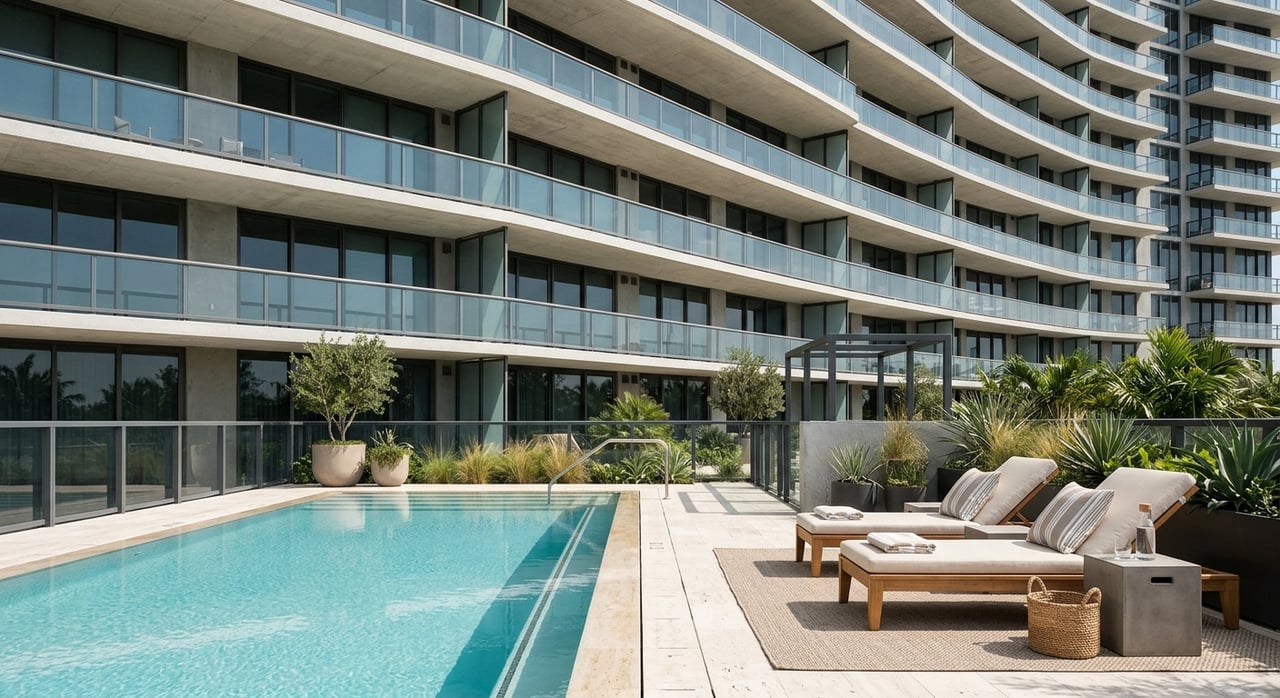
If you’re shopping for a condo in Sunny Isles, the biggest decision may not be size or finishes. It may be whether you want to pay for the oceanfront lifestyle or keep more flexibility with an inland or bay-side building. In a market with wide price ranges, major differences in HOA dues, and building-specific rules that can change your monthly costs, this choice matters more than many buyers expect. Here’s how to compare both paths in Sunny Isles Beach so you can buy with more confidence.
Why this choice matters in Sunny Isles
Sunny Isles Beach is a small barrier-island city between the Atlantic Ocean and the Intracoastal Waterway. Because of that geography, even buildings that are close together can offer very different ownership experiences.
Citywide market data also shows why buyers need to be selective. In Q1 2026, Sunny Isles Beach had 161 closed condo and townhouse sales, a median sale price of $465,000, an average sale price of $1.365 million, 1,128 active listings, and 21.2 months of supply. That gives you a sense of the inventory and pricing environment you’re entering.
If you’re also thinking about rental potential, the citywide average rent was $3,346 in April 2026. That does not tell you what any one condo will rent for, but it helps frame the broader market when you compare purchase price, HOA dues, and carrying costs.
Oceanfront condos: what you’re paying for
Oceanfront condos in Sunny Isles usually offer the clearest lifestyle premium. You’re buying direct beach access, stronger Atlantic views, and in many cases a more full-service building experience.
A representative example is Turnberry Ocean Colony, which is marketed with direct ocean and city views, beach and pool service, a spa, valet, restaurants, and a children’s club. Recent sales there included a $3.95 million unit at $1,058 per square foot and a $2.575 million unit at $1,147 per square foot, with HOA dues listed at $2,933 per month.
That example highlights the main oceanfront tradeoff. You may get the best views and the most resort-style amenities, but the premium is not only in the purchase price. It can also show up in higher dues, insurance review, and reserve planning.
Best fit for oceanfront buyers
Oceanfront can make the most sense if your top priorities are lifestyle and location. If you want to walk straight to the sand, enjoy unobstructed water views, and live in a service-heavy building, this category may justify the added cost.
It can also be a strong fit if you plan to use the condo as a second home and care more about daily experience than price efficiency. In that case, the emotional value of direct beachfront living may outweigh the higher monthly expense.
Main oceanfront tradeoffs
Before you commit to oceanfront, look beyond the view. In Sunny Isles, buyers should weigh several practical issues:
- Higher purchase prices in many beachfront buildings
- Higher HOA dues in many luxury towers
- Greater need for insurance and flood diligence
- More sensitivity to building reserves and special assessments
- Less pricing flexibility compared with some inland options
Because Sunny Isles is a barrier island, even one row back from the beach can create a meaningful price and cost difference. That can matter if you want the area and lifestyle without taking on the full beachfront premium.
Inland and bay-side condos: what you gain
Non-oceanfront condos in Sunny Isles often offer a different value equation. You may give up direct beach frontage, but you can gain more choices in price, view type, and monthly carrying costs.
A useful example is 400 Sunny Isles, a waterfront two-tower project with 640 feet of bay frontage. The developer describes ocean and Intracoastal views from each unit, and the location is within walking distance of both the beach and Oleta River State Park.
Recent examples there showed how wide the range can be. One listing was priced at $690,000, or $632 per square foot, with HOA dues of $872 per month. Another listing was priced at $1.35 million, or $800 per square foot, with HOA dues of $2,125 per month.
That spread is important. Inland or non-oceanfront does not automatically mean basic or low-end. In Sunny Isles, it often means a wider menu of price points and a different balance between lifestyle and cost.
Older inland buildings can lower entry cost
If your priority is getting into the market at a lower price, older inland inventory may offer a more accessible starting point. Arlen House, a 1975 building in Sunny Isles, recently had a unit listed at $240,000 with bay and city skyline views.
That kind of pricing can appeal to value-focused buyers and some investors. Still, lower entry price does not mean lower risk. In older buildings especially, you need to review reserve funding, maintenance history, and any upcoming capital work carefully.
Best fit for inland buyers
Inland or bay-side condos may be the better option if you want more flexibility per dollar. They can work well for buyers who want:
- A lower entry point
- More options in monthly HOA costs
- Bay, city, Intracoastal, or partial ocean views
- Walkable beach access without paying full beachfront pricing
- A broader mix of building ages and unit types
For many buyers, that mix creates a more practical ownership experience. You may still get the Sunny Isles location and waterfront atmosphere while keeping more room in your budget.
The real decision drivers: fees, reserves, flood risk, and rules
In Sunny Isles, the smartest comparison is not just oceanfront versus inland. It is building versus building. That is because condo ownership costs and restrictions can vary sharply, even within the same area.
HOA dues can change the math fast
A condo that looks like a bargain on purchase price can become less attractive if monthly dues are high. The examples in Sunny Isles make that clear, with HOA dues ranging from $872 per month in one 400 Sunny Isles listing to $2,933 per month in a recent Turnberry Ocean Colony example.
That gap can have a major effect on your monthly budget. It can also affect how you evaluate rental income, future resale appeal, and your comfort level as an owner.
Florida condo law matters in older towers
Florida law requires milestone inspections for condominium buildings that are three habitable stories or higher by the end of the year the building reaches 30 years of age, and every 10 years after that. The law also requires structural integrity reserve studies at least every 10 years for qualifying residential condominium buildings.
Those reserve studies cover major components like the roof, structure, fire protection systems, plumbing, electrical systems, waterproofing and exterior painting, and windows and exterior doors. For you as a buyer, that means building age and reserve health can matter just as much as whether the condo sits on the ocean.
Flood review is essential in Sunny Isles
The city states that Sunny Isles Beach is particularly susceptible to flooding from major rain events and storm surge. The city also notes that homeowner’s insurance does not cover flood damage and explains that it participates in the National Flood Insurance Program.
For buyers, that means flood diligence should be part of every condo search here. The city offers property-specific flood risk data and elevation certificate access, which can help you understand the building’s exposure and planning needs.
An oceanfront tower may deserve the most aggressive flood and insurance review because of its location. At the same time, an older inland building may carry more age-related reserve or assessment risk. That is why the right answer depends on the full building profile, not just the map.
Rental rules can outweigh the view
If you are buying with investment goals in mind, rental rules may matter more than the view line. Sunny Isles Beach defines a short-term vacation rental as a condo or apartment leased for six months or less, and owners need a city short-term rental license and local business tax receipt.
Miami-Dade County also has its own short-term rental rules. The county says transient rentals of less than 30 days or one calendar month fall under its short-term definition, require a tourist tax account for rentals of six months or less, and require a certificate of use before listing on peer-to-peer platforms.
Just as important, each building can have its own leasing rules. One Sunny Isles example is Ocean Reserve at 19370 Collins Ave, a 1972-built building that permits daily, weekly, and monthly rentals.
What investors should compare first
If rental income is part of your plan, focus on these items before you compare gross rent estimates:
- Building lease restrictions
- HOA dues and what they cover
- Reserve funding and assessment history
- Milestone inspection status
- Flood profile and insurance considerations
- Your expected hold period
A lower-HOA condo with workable rental flexibility may perform better for an investor than a more glamorous oceanfront unit with heavier dues or tighter rules. In other words, the best investment condo is not always the one with the best postcard view.
How to choose the right Sunny Isles condo
The right choice depends on how you plan to use the property. If you are buying for personal enjoyment and want the strongest beachfront lifestyle, oceanfront may be the best fit despite the higher carrying costs.
If you are more focused on value, flexibility, or managing monthly expenses, inland or bay-side condos may offer a better balance. You can often stay close to the beach while widening your options on price, views, and building types.
For investors, the decision should be even more numbers-driven. In Sunny Isles, lease rules, reserve health, inspection status, and HOA structure can be more important than whether the unit sits directly on the sand.
In a market with meaningful inventory and wide fee variation, the smart move is to match the condo to your use case, hold period, and budget tolerance. If you compare buildings with that lens, you are more likely to end up with a property that fits both your lifestyle and your finances.
If you want help comparing oceanfront and inland condos in Sunny Isles, Terry Segall can help you narrow the options, evaluate building-level details, and move forward with a clear strategy.
FAQs
What is the main difference between oceanfront and inland condos in Sunny Isles?
- Oceanfront condos usually offer direct beach access, stronger Atlantic views, and more resort-style amenities, while inland or bay-side condos often provide lower entry prices, more view variety, and a wider range of HOA costs.
Are oceanfront condos in Sunny Isles always more expensive to own?
- They often come with a higher total cost because the premium can show up in both purchase price and monthly dues, along with added flood, insurance, and reserve-review considerations.
Are inland condos in Sunny Isles still close to the beach?
- Many non-oceanfront condos are still within walking distance of the beach, which can let you enjoy the location without paying full beachfront pricing.
What should buyers review in older Sunny Isles condo buildings?
- You should review reserve funding, maintenance history, milestone inspection status, structural integrity reserve study details, and any upcoming capital work or assessments.
Can you rent out a condo short term in Sunny Isles Beach?
- It depends on both local rules and the building’s own bylaws, so you should confirm city requirements, county requirements, and the condo association’s lease restrictions before you buy.
Is an oceanfront condo or inland condo better for investors in Sunny Isles?
- For many investors, the better fit is the building with workable lease rules, manageable HOA dues, sound reserves, and a realistic rent-to-carry profile rather than simply the best view.